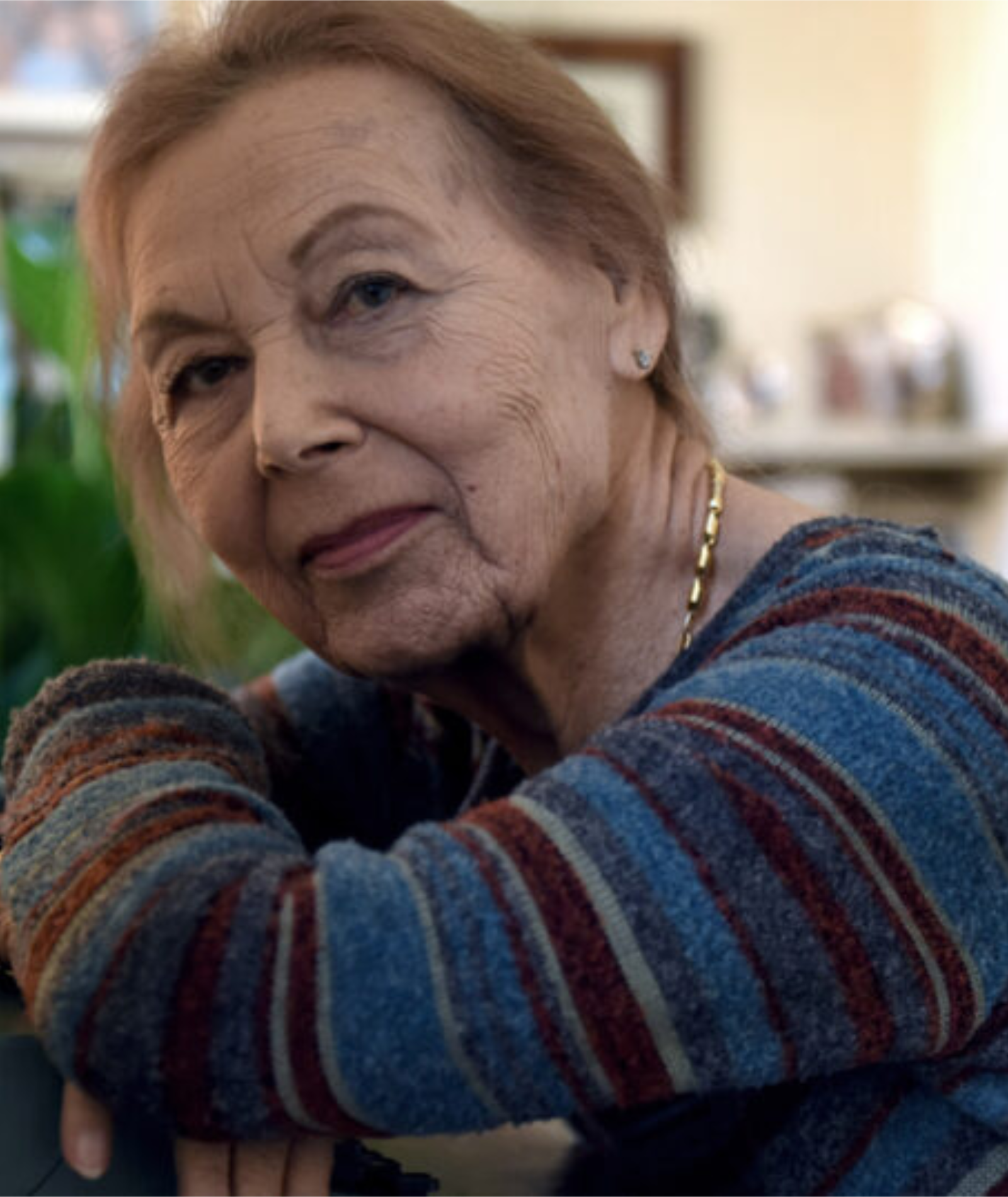
Edith Bruck
Writer
Edith Steinschreiber, later Bruck — the surname acquired from her first husband, whom she married to avoid compulsory military service — was born in Tiszabercel and grew up in Tiszakarád, a small Hungarian village on the border with Slovakia. She is the youngest of the six children of a poor Jewish family. From childhood she knew the hostility and the discrimination that, in her country as in the rest of Europe, befell the Jews. In the spring of 1944, at thirteen years of age, she was deported from the ghetto of Sátoraljaújhely to Auschwitz and then to other German camps: Kaufering, Landsberg, Dachau, Christianstadt and, finally, Bergen-Belsen, where she was liberated, together with her sister, in April 1945. Her mother, her father, a brother and other relatives did not return. After the liberation by the Anglo-Americans she tried to return to Hungary, to her home; but she soon discovered that the end of the war meant neither peace nor welcome, but new difficulties and, above all, new wanderings in search of a place in the world where she could live. In 1946 she reached one of her older sisters in Czechoslovakia, saved by Perlasca in Budapest, but the attempt at reunion failed. In September 1948 she reached Israel, just before the birth of the new State. Here – to avoid military service – she married and took the surname she still bears today: Bruck. In 1954, driven by the impossibility of fitting in and recognising herself in the country imagined as one “of milk and honey”, unable to accept a reality marked by conflicts and tensions, she came to Italy and settled in Rome, where she still lives today.
Sources
- Wikipedia — Edith BruckConsulted for a biographical summary.