Massimo Donà

On Friday 15 May 2026, at the Teatro Comunale Vittorio Emmanuele in Benevento, the award ceremony of the “Io Filosofa/o” competition was held, promoted as part of the 12th Sannio Philosophy Festival by the philosophy and culture association “Stregati da Sophia” in collaboration with the University of Sannio. During the event, thirteen scholarships were awarded to students from high schools and secondary institutes of the province of Benevento, selected from around seventy participants who had sat the test on 28 April 2026 at the Sant'Agostino university complex.
The competitors wrote short essays inspired by the themes addressed in the Festival's lectio magistralis lectures, standing out for their critical spirit, personal reflections and ability to explore the meaning of beauty. The examining panel, composed of university lecturers and institutional representatives, selected the best pieces of work, awarded thanks to the contribution of the University of Sannio and numerous local bodies and sponsors.
The ceremony featured institutional greetings from the Prefect of Benevento, the Rector of the University of Sannio and the Councillor for Culture of the Municipality of Benevento. The central moment of the initiative was the lectio magistralis of the philosopher Massimo Donà, entitled “Beauty and knowledge from Plato to René Magritte”, introduced and coordinated by Prof. Carmela D'Aronzo. The event was enriched by the musical performances of the jazz group of the “Nicola Sala” Conservatory of Benevento.
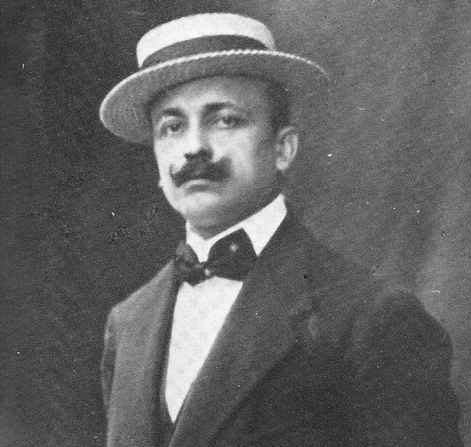
On Friday 15 May 2026, to celebrate the 150th anniversary of the birth of Filippo Tommaso Marinetti, Prof. Massimo Donà devoted his lecture to a reflection on and analysis of the thought and works of Filippo Tommaso Marinetti. Just as for Plato the artist isolates things, making them free and therefore independent of the context they belong to and removing them from the order of meaning, so for Marinetti the work and the “things” represented within it must be handed over to a “pure movement”, likewise removed from any form of signification and therefore of knowability, if only so as not to subject it to the ends and causes that alone can make it useful “for us”. Hence an extreme use of onomatopoeia and of entirely isolated words: a movement without causes or ends, capable of restoring even the simple “noise” of life, surprisingly similar to that of machines. The Futurist revolution, in short, also aims to bring out from the heart of every thing the penetrating hiss of existing, that “pure being-there”, that pure noise which alone seems able to force empty utilitas to step aside, allowing all of us to move forward following a rhythm at last free from abstract and nomothetic teleologies.